FREE Express Delivery Australia wide for all orders over $120

Are Modern Moisturisers Harming Our Skin?
Admin
3 min read
For decades, we’ve been told that modern moisturisers are the key to soft, hydrated, glowing skin. Yet, many people are experiencing the exact opposite: sensitivity, irritation, breakouts, dermatitis—even premature ageing.
So… what’s going on?
Let’s explore the science behind synthetic moisturisers, how they affect the skin barrier, and why returning to nutrient-dense, bio-compatible ingredients (like tallow) might be the skin reset we’ve been looking for.
The Skin Barrier: Your Built-in Defence System
Your outermost skin layer—the stratum corneum—is your body’s natural shield. It keeps moisture in and irritants out.
It’s made of:
Skin cells (corneocytes)
Natural lipids (ceramides, cholesterol, fatty acids)
Natural moisturising factors (NMFs)
Healthy barrier = calm, hydrated, resilient skin
When this barrier is disrupted?
You get dryness, inflammation, acne, rosacea, eczema, and that uncomfortable “tight then oily” feeling.
The Problem with Many Modern Moisturisers
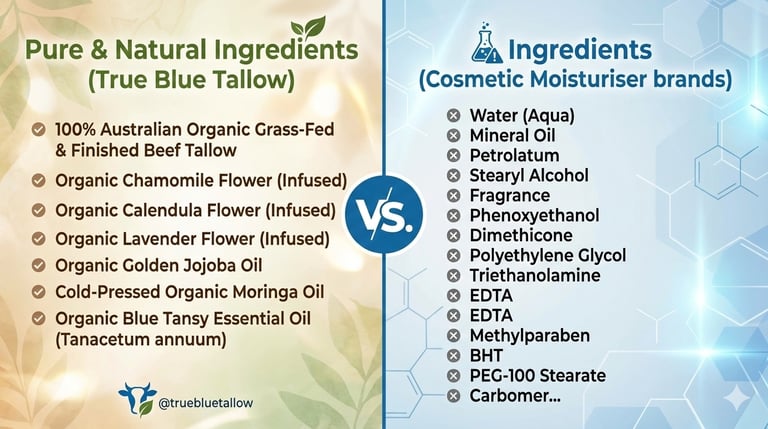
Most conventional creams rely on synthetic chemicals designed to feel moisturising—but don’t repair the skin long-term.
Let’s break down the usual suspects:
1. Petroleum-derived occlusives (e.g. petrolatum, mineral oil)
They form a film on the skin to trap moisture.
✔ Pros: Immediate softness
✘ Cons: Prevents natural lipid function and cell signalling, creates dependency, can clog
A 2018 review in Contact Dermatitis linked petroleum-based products to increased irritant reactions in sensitive individuals.
2. Silicones (Dimethicone, Cyclopentasiloxane)
Creates a silky "blurring" effect—like plastic wrap on skin.
✔ Pros: Smooth feel, instant glow
✘ Cons: Interferes with skin’s ability to breathe and self-regulate, can trap debris and bacteria
A 2021 article in Dermatitis noted that long-term silicone use can weaken the barrier and aggravate dermatitis.
3. Emulsifiers
Required to mix oil and water in lotions, but they also keep removing your skin’s natural oils every time you wash.
A study in the International Journal of Cosmetic Science found that certain emulsifiers increase transepidermal water loss (TEWL), weakening skin over time.
4. Preservatives (Parabens, Phenoxyethanol, Formaldehyde-releasers)
These prevent bacterial growth…but they also disrupt skin flora.
Research in Frontiers in Microbiology shows that preservatives can damage the skin microbiome, leading to inflammation, sensitivity, and acne.
5. Fragrance – the #1 cause of cosmetic irritation
Even “natural fragrance” is often a cocktail of 20+ undisclosed chemicals.
The American Academy of Dermatology identifies fragrance as the leading cause of cosmetic-related contact dermatitis.
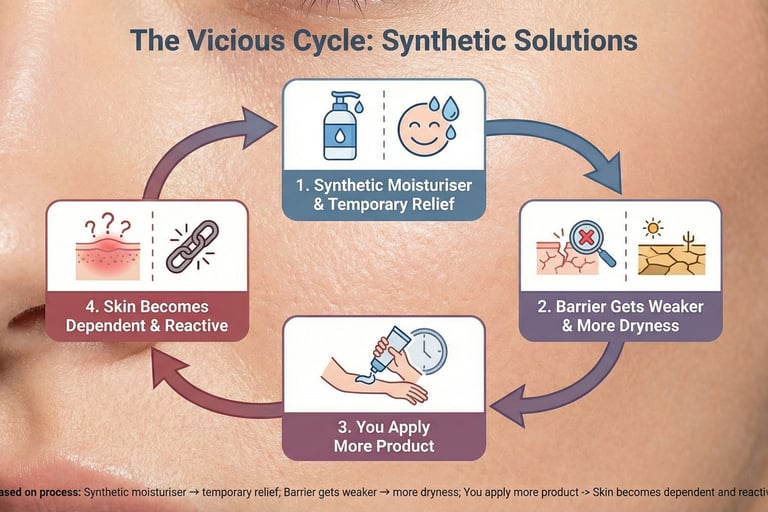
The Vicious Cycle
If these ingredients aren't serving your skin, why are they still everywhere?
The answer usually comes down to the bottom line: they are cheap to manufacture, easy to stabilise for long shelf lives, and engineered to provide instant sensory gratification. While big brands market this as "advanced science," they are often prioritising texture over true health. Don't be fooled by that temporary silky finish—feeling moisturised by a synthetic coating is definitely not the same as actually being moisturised.
in other words:
"feeling moisturised"
≠ "being moisturised"
What Actually Heals the Skin?
Ingredients that mimic the skin’s natural structure and feed it essential lipids.
Such as:
Ceramides
Cholesterol
Stearic & palmitic acid
Fat-soluble vitamins A, D, E, K
Guess what naturally contains ALL of these—in the same ratios as healthy human skin?
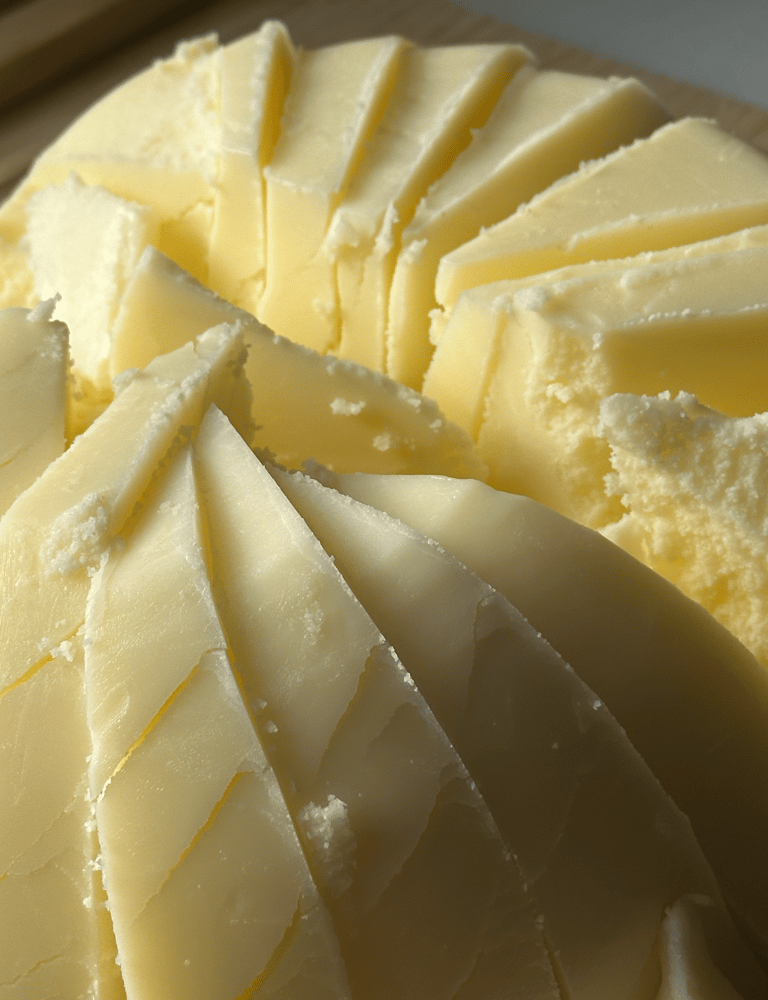
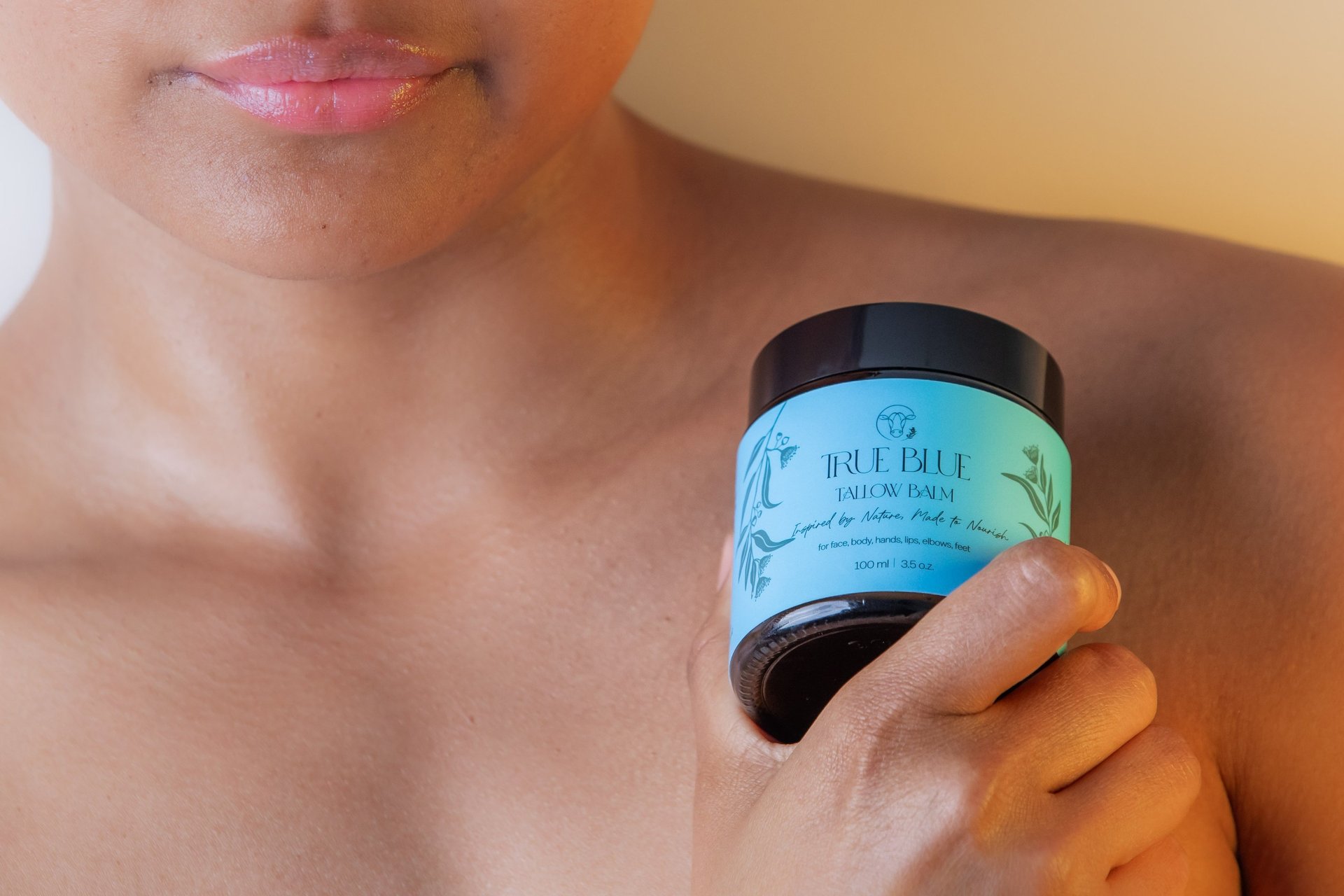
Grass-fed beef tallow
Multiple studies confirm that topical application of skin-identical lipids supports barrier repair far more effectively than synthetic fillers.
(Journal of Lipid Research, 2020)
The Return to Ancestral Skincare
Traditional cultures used animal fats for healing, skin protection, and regeneration for thousands of years.
Modern science is now validating why it worked.
Tallow-rich formulas:
✔ Support the barrier
✔ Provide real nourishment
✔ Help balance oil production
✔ Calm inflammation
✔ Work with the skin—not against it
Why Natural, Bio-Compatible Moisture Works Better
The Bottom Line
There is a link between synthetic moisturisers and skin harm—especially when used long-term.
They may provide temporary softness, but often at the cost of your barrier, microbiome, and natural lipid balance.
Healthy skin doesn’t need more product. It needs the right kind of support.
Maybe it’s time we stop “coating” our skin…
…and start feeding it.
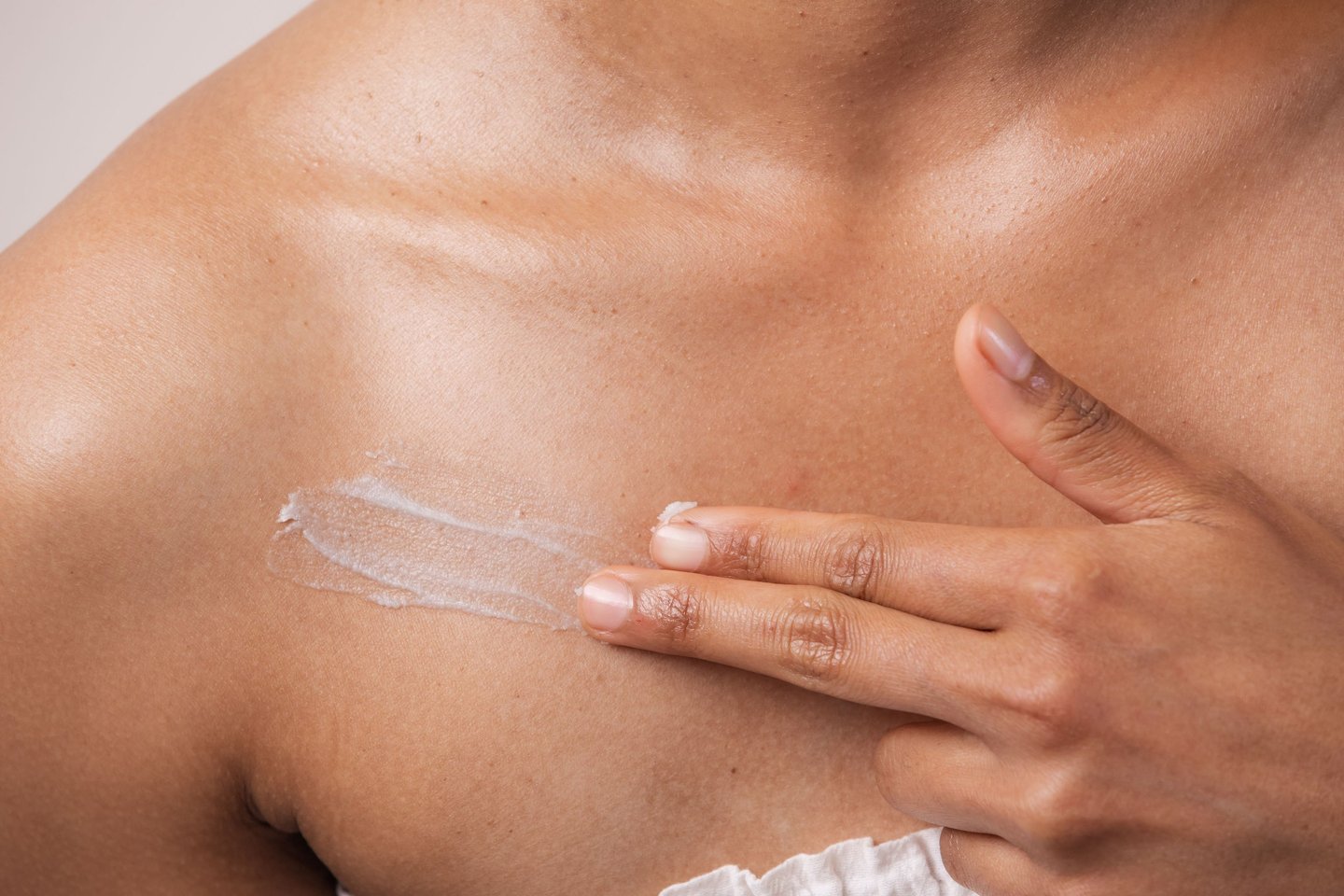
If you’re curious about what skin looks like when it’s truly nourished—not just covered—we’re here for it.
LEGAL
True Blue Tallow © 2025 - 2026 . All rights reserved.