FREE Express Delivery Australia wide for all orders over $120

Phenoxyethanol in Skincare: A Gentle Guide to What You Need to Know
Is phenoxyethanol safe in skincare? Our gentle guide explains this common preservative, its purpose, and what you need to know for confident, healthy skin.
4/9/20269 min read
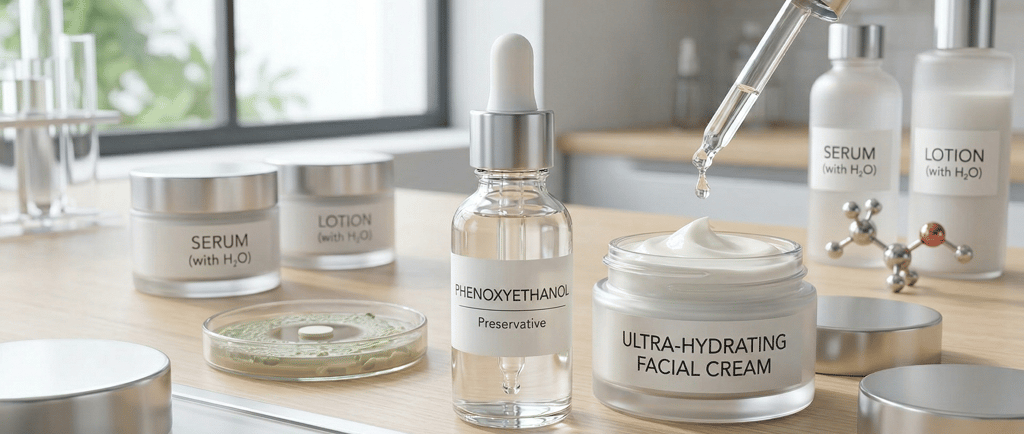
While it serves a practical purpose, its widespread use is a key difference between conventional skincare and a more wholesome philosophy that values fewer, more natural ingredients. Understanding what it is and why it's there is the first step in making informed choices for your skin.
The Role of Preservatives in Skincare
Any skincare product that contains water-like lotions, creams, and serums-creates a welcoming environment for microbes to grow. A preservative system is essential in these formulas to stop them from becoming contaminated and unsafe to use. Without it, you could be applying a cocktail of bacteria to your skin. This is why water-free formulas, like pure tallow balms, don’t require the same synthetic preservatives.
Is it a 'Natural' Ingredient?
This is a common point of confusion. While Phenoxyethanol can be found in nature (it occurs in green tea, for example), the version used in cosmetics is synthetically created in a lab. It is typically made from petroleum-derived compounds. So, despite its natural origins, the ingredient in your skincare bottle is man-made, which is an important distinction for those seeking truly natural, unprocessed skincare.
Common Products You Might Find It In
Because it's so versatile, you’ll find this preservative in an incredibly wide range of personal care items. We encourage you to grab a few products from your bathroom cabinet and have a look. You might spot it in:
The Gentle Alternative: Why We Choose a Different Path
At True Blue Tallow, our philosophy is rooted in a simple, wholesome belief: effective skincare doesn’t need harsh synthetics. While the industry has come to rely on preservatives like phenoxyethanol to extend shelf life, we believe there is a gentler, more traditional way to care for your skin. This naturally leads to the question we love to answer: "How do your products stay fresh?"
The secret isn't a secret at all-it's just a return to nature's wisdom.
The Power of Water-Free Formulations
The primary reason most skincare requires strong preservatives is because of its water content. Where there is water, microorganisms like bacteria and mould can thrive. By creating completely anhydrous (water-free) balms, we simply remove the environment they need to grow. This elegant solution means we can forgo broad-spectrum synthetic preservatives entirely, offering you a product that is more concentrated, potent, and packed with pure goodness in every jar.
Nature's Nourishment: Tallow as a Stable Base
Our hero ingredient, pure grass-fed tallow, is the heart of our formulations for a reason. Tallow has a naturally stable fatty acid profile, rich in saturated fats, which makes it far less prone to oxidation (going rancid) than many plant-based oils. Its composition is also beautifully compatible with our skin's own natural oils, or sebum, allowing it to be absorbed deeply for true, lasting nourishment without disrupting your skin's delicate balance.
What 'Preservative-Free' Means for Your Skin
Choosing a preservative-free product is about more than just avoiding one ingredient; it’s about embracing a philosophy of pure, uncomplicated care. For your skin, this means:
- A lower risk of irritation: Fewer synthetic ingredients mean fewer potential triggers for sensitive skin.
- More concentrated nourishment: Every drop of our balm is a potent, active ingredient designed to feed your skin.
- Peace of mind: You can feel confident using a product that is truly gentle enough for the whole family, from babies to grandparents.
It’s our commitment to providing you with skincare with nothing to hide. By working with nature, not against it, we deliver wholesome, effective products you can trust. Ready to experience the gentle difference? Explore our handcrafted tallow balms today.
Choosing Purity: Your Final Thoughts on Skincare Preservatives
Navigating the world of skincare ingredients can feel complex. Ultimately, understanding what phenoxyethanol is-a widely used synthetic preservative-and why it's in so many products empowers you to make conscious choices for your skin. While it helps prolong shelf life, you now have the knowledge to decide if it’s right for you. For those with delicate or reactive skin, choosing a simpler, more natural approach is often the kindest path forward.
At True Blue Tallow, we believe in skincare with nothing to hide. Our philosophy is simple: goodness in, goodness out. That's why our balms are 100% free from synthetic preservatives. Each jar is lovingly handcrafted in Melbourne with local, organic ingredients and is specially formulated to be gentle on the most sensitive skin. If you're ready for a no-fuss routine that truly nourishes, we invite you to discover our pure, handcrafted tallow balms with nothing to hide. Your skin deserves the gentle, honest care that nature provides.
Frequently Asked Questions About Phenoxyethanol
### Is phenoxyethanol a paraben or a formaldehyde-releaser?
Phenoxyethanol is neither a paraben nor a formaldehyde-releaser. It belongs to a different chemical family called glycol ethers. While all three can act as preservatives in skincare, they have very different chemical structures and properties. This common point of confusion is why we believe in ingredient transparency, so you always know exactly what you’re putting on your skin. It’s important to understand these distinctions when making wholesome choices for your family’s skincare.
### Is phenoxyethanol considered a 'clean' beauty ingredient?
Whether phenoxyethanol is 'clean' depends on the definition, as the term isn't officially regulated in Australia. Some brands consider it a safer synthetic preservative compared to others. However, at True Blue Tallow, our philosophy of 'clean' means avoiding all synthetic preservatives entirely. We believe the most nourishing skincare comes directly from nature, which is why we choose pure, traditional methods and ingredients that don't require any synthetic additives to stay fresh and effective.
### Can phenoxyethanol trigger eczema or dermatitis?
While uncommon, it can potentially trigger reactions like eczema or dermatitis in individuals with very sensitive or allergy-prone skin. Most people tolerate it well in the low, regulated concentrations found in skincare. If you have a history of skin sensitivity, we always recommend patch testing any new product on a small area first. This gentle approach helps ensure an ingredient is a good and happy fit for your unique skin, giving you peace of mind.
### Is it safe to use products with phenoxyethanol during pregnancy?
In the small concentrations (typically under 1%) used in skincare, it is generally considered safe for use during pregnancy. However, we believe in taking the gentlest possible approach during this special time. We always recommend showing your product's ingredient list to your doctor or midwife. They can provide the best, most personalised advice to ensure you feel completely secure and cared for in your choices for both you and your baby.
### Why doesn't True Blue Tallow use any preservatives in its balms?
At True Blue Tallow, we believe in pure, no-fuss skincare. Our balms don’t need preservatives because they are anhydrous, meaning they are completely free from water. Bacteria and mould need a water-based environment to grow. By using only rich, nourishing oils and grass-fed tallow, our handcrafted balms are naturally self-preserving. It’s our way of giving you wholesome goodness with absolutely nothing to hide-just as nature intended.
### What is the difference between phenoxyethanol and alcohol in skincare?
Phenoxyethanol and alcohol serve different primary roles. Phenoxyethanol is a preservative, specifically added to water-based products to prevent the growth of harmful bacteria and mould. In contrast, simple alcohols like ethanol are often used as solvents to dissolve other ingredients or to help them penetrate the skin. While both can have preservative properties, alcohols are more known for their potential drying effect, whereas phenoxyethanol’s main job is to keep your product safe.

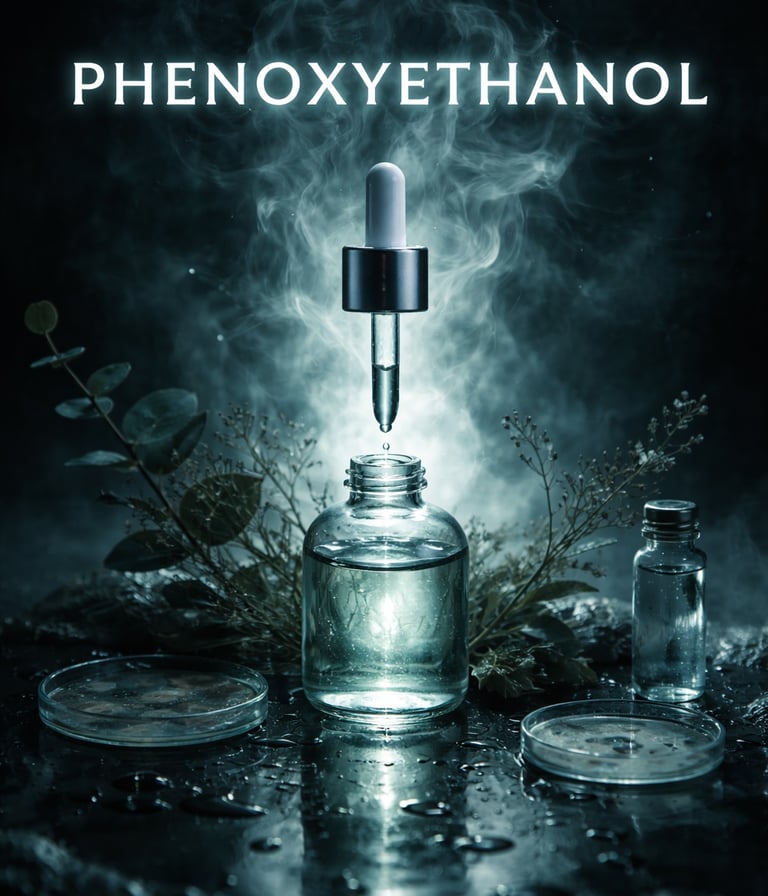
Flipping over a skincare bottle to read the ingredients can sometimes feel like a chemistry test you didn't study for. If you’ve ever felt a little lost trying to understand long, complicated names, you’re not alone. One ingredient you’ll often find, from face creams to baby wipes, is phenoxyethanol. It’s used as a preservative to give products a longer shelf life, but what does that really mean for your skin? If you worry about what you’re putting on your body and struggle to find gentle options, we understand.
We believe in skincare with nothing to hide. That’s why we’ve created this simple guide to help you feel confident and informed. Together, we’ll gently unpack what this common synthetic preservative is, look at the potential concerns, and explore why choosing truly natural, wholesome skincare is a simple way to nourish your skin. You deserve to feel secure in your skincare choices, and it all starts with understanding what’s in the jar.
What is Phenoxyethanol and Why Is It in So Many Skincare Products?
If you’ve ever glanced at the ingredients list on your moisturiser or foundation, you've likely come across the word phenoxyethanol. In simple terms, it's one of the most common synthetic preservatives used in skincare today. Its primary job is to keep your products safe by preventing harmful bacteria, yeast, and mould from growing inside the jar. This is why it’s a favourite for many mass-market brands-it’s an effective and very affordable way to give products a long shelf life.
To help you see how it works, here is a simple breakdown:
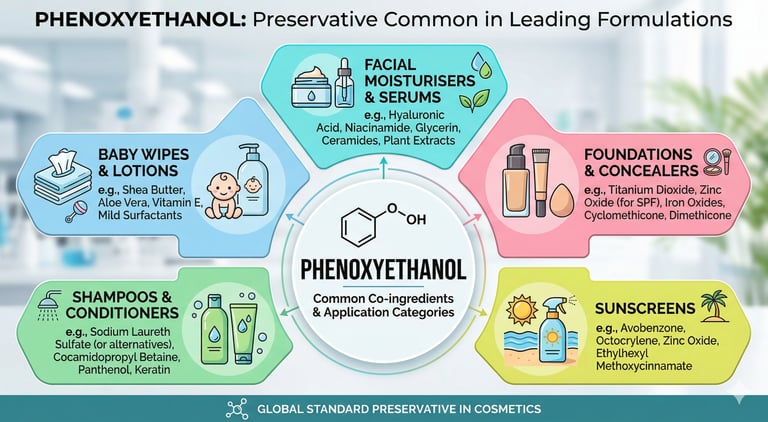
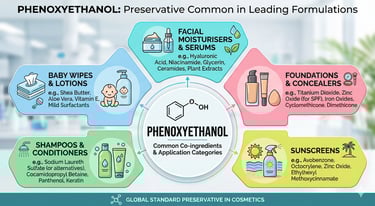
A Calm Look at the Safety Concerns Around Phenoxyethanol
It’s completely understandable to see a long, chemical-sounding name on a skincare label and pause. When it comes to phenoxyethanol, you’re not alone in your curiosity. This ingredient is approved for use in cosmetics at low concentrations (typically up to 1%) around the world, including here in Australia. But for many of us seeking pure, wholesome skincare, the conversation goes a little deeper.
Our goal isn’t to cause alarm, but to empower you to make informed choices that feel right for you and your family. We believe in a ‘less is more’ philosophy, especially when it comes to nourishing sensitive skin. Let’s gently explore some of the common questions that arise.
Skin Irritation and Allergic Reactions
The most common concern is its potential for skin irritation. While many people use products containing it without issue, those with very sensitive skin or pre-existing conditions like eczema and dermatitis may find it can be a trigger. For skin that is already compromised or reactive, synthetic preservatives can sometimes contribute to redness, itchiness, or flare-ups. This is why simple, natural formulas are often a source of relief.
Concerns for Babies and Young Children
When it comes to our little ones, we naturally become extra cautious. A historical FDA warning regarding the ingestion of a specific nipple cream containing this ingredient often comes up. While this related to ingestion, not topical use, it highlights that a baby’s skin is far more permeable and delicate than an adult’s. This is a key reason why many parents consciously seek out preservative-free balms and creams for their children’s wholesome care.
Regulatory Views vs. A Natural-First Approach
It’s true that regulatory bodies in Australia, the EU, and Japan permit this preservative up to a 1% concentration. Industry resources provide detailed reviews on the safety of phenoxyethanol, confirming its approved status. But at True Blue Tallow, we ask a different question: does ‘permitted’ always mean ‘optimal’ for your family’s skin health? We believe in going beyond the minimum standard to offer skincare with nothing to hide-just pure, nourishing goodness from nature.
How to Spot Phenoxyethanol on an Ingredient Label
Learning to read a skincare label is one of the most empowering things you can do for your skin. It helps you look past the clever marketing and understand what you are truly putting on your body. The good news is, it’s much simpler than it seems.
The first thing to know is that ingredients are always listed in order of concentration, from the highest amount to the lowest. This means the first few ingredients make up the bulk of the product. Preservatives like phenoxyethanol are effective in very small amounts (usually less than 1%), so you will almost always find them near the very end of the list.
Decoding the INCI List
When you scan an ingredient list, you’re looking at what’s called the INCI list. INCI stands for International Nomenclature of Cosmetic Ingredients, which is simply a universal system for naming ingredients to keep things consistent across the globe. While it is a globally recognised preservative, even being approved by the FDA in concentrations up to 1%, it’s still important to know what you’re looking for. On the label, it will appear simply as: Phenoxyethanol. Sometimes, you might see it used in combination with other preservatives like ethylhexylglycerin.
A Quick Checklist for Cleaner Labels
When you’re in a hurry, you don’t need to analyse every single word. Instead, you can use this simple, no-fuss guide to make more conscious choices about what goes on your skin and your family’s.
- Look for shorter ingredient lists. As a general rule, fewer ingredients often mean a purer, less complicated product with less room for potential irritants.
- Prioritise ingredients you can recognise. If a label reads more like a wholesome recipe than a chemistry experiment, that’s a wonderful sign.
- Question the purpose. Ask yourself if an ingredient is there to truly nourish your skin or just to make the product look, feel, or smell a certain way. Your skin deserves real, nourishing goodness.
Want skincare with nothing to hide? See our simple ingredients.
LEGAL
True Blue Tallow © 2025 - 2026 . All rights reserved.